
Rural Kids' Lesson in Learning How to Float
What rural kids learn about opportunity when access falls short

My son made it to Nationals, again, but this is the first year he can actually go.
Last year, Fletch was one of three eighth graders on a team of four that qualified through the Technology Student Association to compete in robotics in Washington D.C. They did the work. They built, competed, and earned their place. But because he was still in middle school, the high school advisor couldn’t register him, or two other middleschoolers on the team, for nationals.
Last year, I watched these bright eighth graders compete in a very rigorous competition with a freshman leading them. At the time, I didn’t know him well. Over the past year, I’ve watched that kid grow into himself in a way that’s hard to describe unless you’ve seen it happen up close. The kind of growth that looks a little awkward at first, like a coat that’s too big. Sleeves too long and shoulders not quite filled out yet. But you buy the coat even if we’re not quite ready for it yet, but because we know we’ll get there.
This year, there are two teams from their robotics club that have qualified. And somewhere along the way, it stopped feeling like fun with your best friends and started looking like a path.
Not a guaranteed one. Not an easy one. But a real one.
It’s only been two weeks since they qualified, so we hit the ground fundraising. In just over a week, they’ve raised $2,200 toward a $12,000 goal. The goal covers five students and up to three chaperones. Plane tickets. Hotel rooms. Registration. Transportation of their delicate equipment.
But as we scramble to revamp the submissions, the kids are also preparing for a different outcome.
What if? What if they did everything right and still can’t go? Last night we talked about sending two or three kids instead of five.
Yesterday, as I was talking to a potential sponsor, he said something I haven’t been able to shake.
“I hate to say this, but it’s only five students.”
“Yes,” I said. “It’s five of Creston’s brightest.”
In rural Iowa, five isn’t small. Sometimes five is an entire class. My husband taught in Ringgold County, where one graduating class had five students. Not a subgroup. Not a program. The class. I taught many classes of five at Southwestern Community College, in the HiSET program, where people, aged 16+ worked on a high school equivalency program.
Imagine not having a pathway to education, and eventually employment, simply because a quota wasn’t met.
We don’t measure impact the same way here. We can’t.
Not only is it difficult to find opportunities for advanced competition in rural areas, but it’s also even more difficult to attract and retain the kind of talent that have the capability to work and run this town and these businesses in the first place. Wages. Housing. Amenities. Opportunity for youth. All of it plays a role.
So what do companies invest in? You’d think one of the largest employers in town would see the value in investing in the very people who might choose to stay. Who might build something here. Who might come back.
It wasn’t long before I could feel the conversation slipping, so I shifted the ask.
I told him about the drone. And asked for an investment in to the club, in general.
The drone these students are using to compete at a national level isn’t theirs. It’s on long-term loan from our public library. Equipment is borrowed, shared, and sometimes pieced together.
And while there’s something admirable in that kind of resourcefulness, there’s also a limit. You can’t build a future on borrowed tools forever.
I show my son how to work hard, to show up, and to stretch himself. And he does. Especially here, where there’s often less to work with and more to prove.
And there always comes a moment, if he and his friends are lucky, when effort meets opportunity. But there’s always a hurdle: Money.
I’m not saying it’s unfair. But there’s quite the distance between where they are and where they can go next. And that’s the part we don’t talk about. The distance between the haves and the have nots.
My thoughts aren’t about one trip, or even about these five kids. It’s about how often this moment repeats itself in towns like ours. How many kids stand at that same edge, looking forward, doing the math, and lowering their expectations because of cost.
My son sees it, and I wonder what he’s learning from it. Because I don’t want him to believe that opportunity belongs somewhere else. But I also don’t want to pretend that access isn’t part of the equation.
So maybe the better question is this: If we say we want young people to stay, to build, to invest in their communities: how are we showing and investing in them?
Because five kids isn’t “only.”
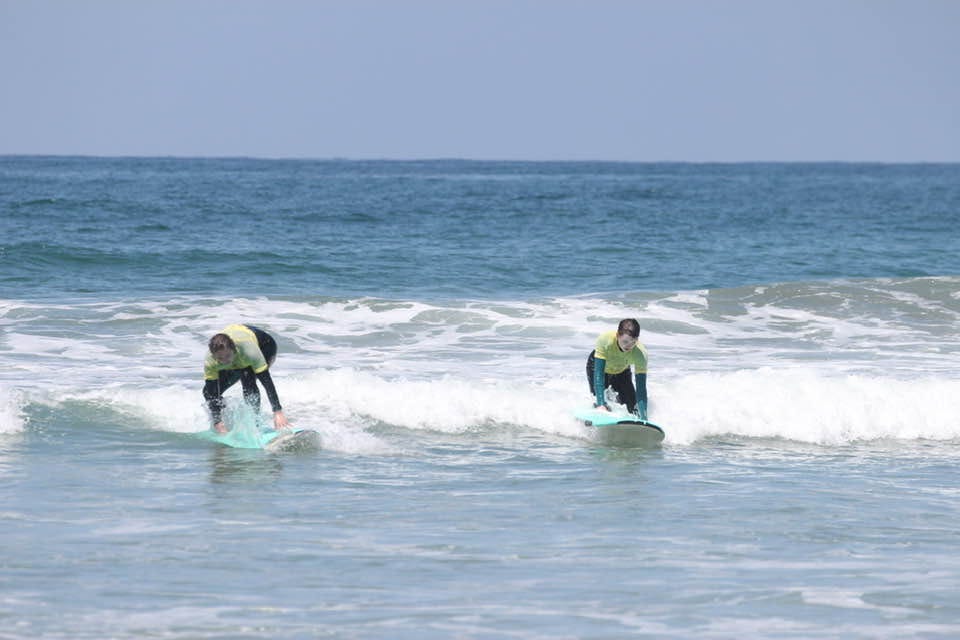
It’s five students balancing on the edge of something they earned, learning what it takes to reach it. And if they don’t make it this time, then what they’ve built doesn’t disappear. It carries forward to the next year’s effort, floats the next team, and maybe their third chance.
That’s what rural kids learn.
Not just how to get there, but how to keep something afloat until they can.
Hello, I’m Sarah Scull, a former journalist and proud member of the Iowa Writers’ Collaborative.
If you want to know what Iowa actually sounds like right now, follow the weekly roundups from the Iowa Writers Collaborative. We do what newspapers rarely can anymore: move easily from politics to poetry, from sports to sharp human stories, capturing the full, complicated life of the state in one thoughtful sweep. It’s Iowa, reported and reflected by people who live here and pay attention.
You've captured rural Iowa here and much of rural America. And certain urban communities. Investing in our nation's youth is worth it. It's like the story of yeast in the Bible. We don't have to do it for these students, but we've got to bring the yeast if we want them to rise.
5 kids: so important, so worthy, so our future!