
Everything water reflects
How a river in Washington helped me see an Iowa lake—and myself—more clearly.

Last month, I chaperoned my son’s engineering team to the Technology Student Association National Conference in Washington, D.C. They were there to compete in forensic science, robotics, drone navigation, and digital video production. The kids didn’t advance to the finals, but we all came home inspired. For me, not in the way I expected. It wasn’t an award ceremony or a breakthrough competition that stayed with me, but rather a familiar river and an old version of myself.
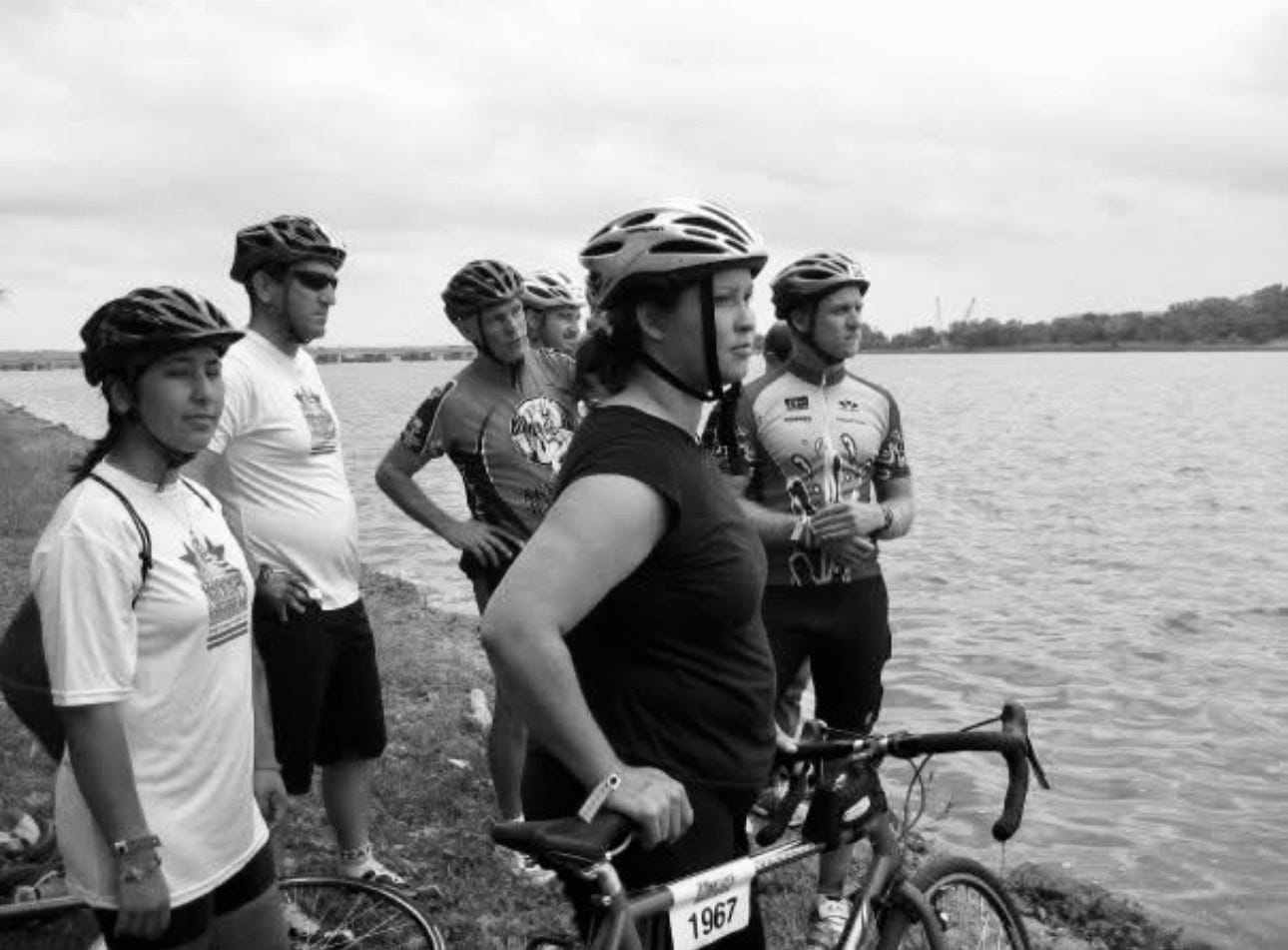
The last time I was in Washington, it wasn’t my destination. It was my finish line.
As I overlooked the Potomac River from my hotel room, I had flashbacks to the last time I stood along that river. It was 2008, and I flew from San Diego to Washington D.C. to compete in my first Olympic-distance triathlon. People thought I was crazy for not visiting any museums or the Capitol while I was there, but I can assure you, every hour was accounted for with practice swims and bike rides to get used to the humid air after months of training in San Diego’s dry coastal climate.
Growing up in San Diego, I never realized how much water shaped who I am. San Diego is considered the birthplace of the modern triathlon, with the first swim-bike-run race held in Mission Bay in 1974. I grew up swimming in that same region, and it’s where I eventually taught my daughter to sail and my son to surf.
Water wasn’t something I visited. It was my identity.
Growing up, I was a competitive swimmer, a water polo goalie, and eventually a triathlete. I spent summers trying to surf and too many afternoons gripping on to sea grass as the tide whipped my body around in an attempt to pull me out to sea. In my first semester of college, I even signed up for springboard diving. And not because I had the talent for it, but because Thornton Mellon (Rodney Dangerfield) made diving look fun and the Triple Lindy look attainable. Neither were true.
The Potomac challenged me in ways the Pacific never had. Aside from the fear of bacteria and waste, the swim was different in every way. In saltwater, your body rides higher. In the Potomac’s “fresh” water, my I had to work harder with every stroke. I remember feeling strangely heavy, like I’d forgotten how to swim.
Now, nearly twenty years later, I stood overlooking that same river with gratitude for my son. Had it not been for him and his effort, I wouldn’t be standing there. This time in D.C. I got to tour the Capitol and obtain a library card from the Library of Congress. We walked through rooms where history has been argued, preserved, and rewritten. I watched him appreciate spaces and monuments I’d only rushed past on my bike in another lifetime.
And somewhere between all of that, I found myself missing the person I used to be. Not because I was younger, but because I was so completely at home in the water. In being on teams as a teen and training as an adult, I had real community. People who were full of stoke at 6 a.m. on a Saturday to dive into frigid water. I’ve lived in Iowa for fourteen years now. Somewhere along the way, I stopped thinking of myself as a swimmer.
Part of my avoidance of open water swimming in Iowa is practical.
Ocean swimmers develop a healthy respect for the environment, its creatures, and rip currents. Midwesterners have a different list of worries like blue-green algae blooms, e. coli advisories, brain-eating amoebas and cancer. I definitely have questions about whether the water is safe today and concerns about finding out tomorrow that it wasn’t. And while the actual risk is small, it’s real and those fears have kept me on shore.
Since coming home, I’ve found myself paddling around McKinley Lake and up Hurley Creek here in Creston. And the more time I spend on the water, the more curious I become. It’s inspired me to learn more about the wildlife, habitat, our watershed, the lake’s history, and the long chain of decisions that determine what ends up in the water beneath my kayak.
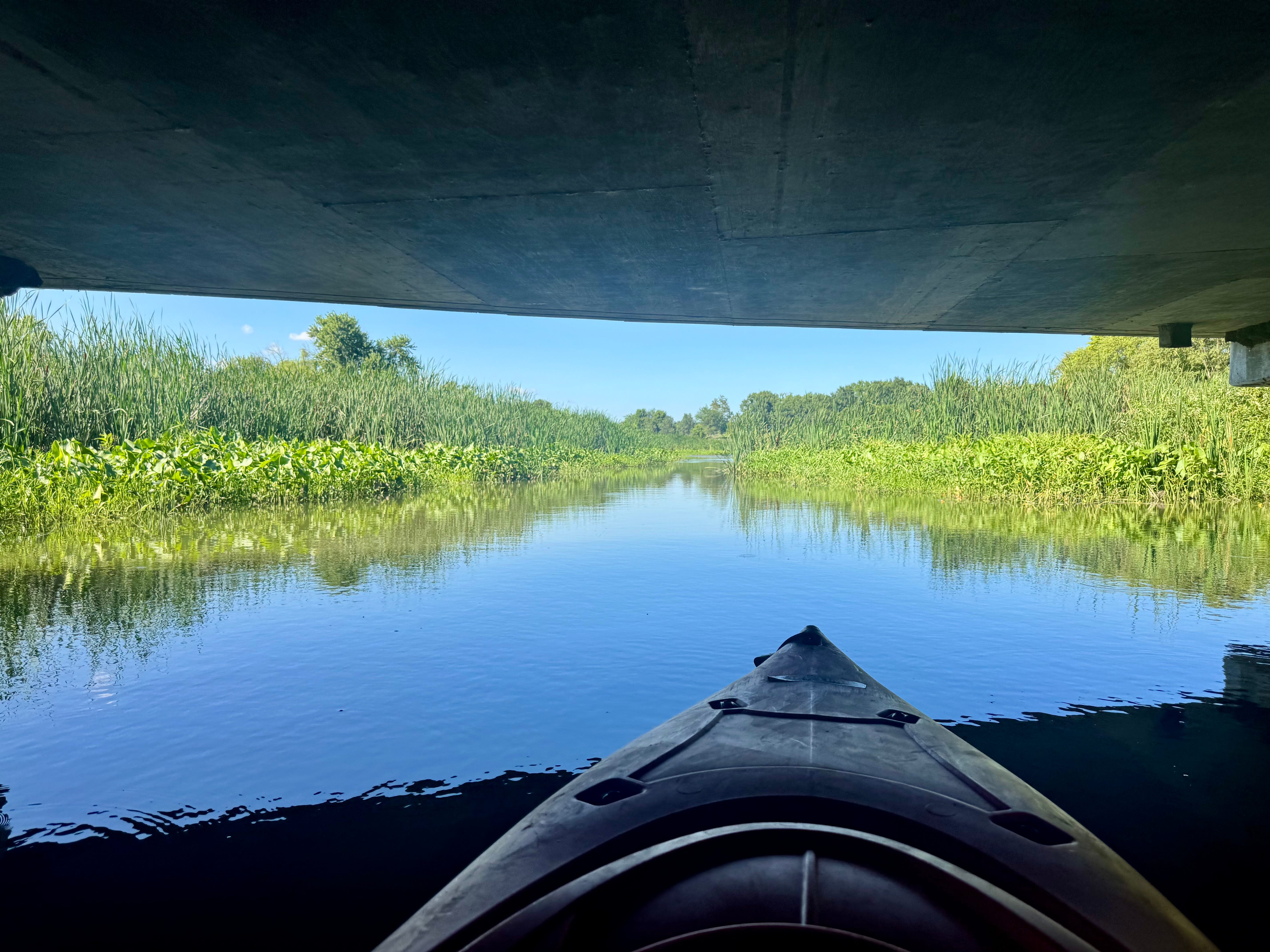
This spring, the City of Creston completed a nearly $4 million restoration of McKinley Lake, dredging years of accumulated sediment to improve the lake’s health and expand recreational opportunities. As grateful as I am for that investment, I like to think the project was less about restoring a lake and more of an invitation.
I hope you’ll join me.
Well said. Water is such an amazing gift. It’s always surprising, in a good way, when being in unfamiliar settings helps us see home in a new way. Thanks for this perspective!