
A Bro Hug Over Prose
A story about the kind of men we still have time to raise

There are a lot of things people say boys are supposed to care about. Winning. Dominating. Hiding emotions. Acting unfazed. I know this as the sister of three brothers. Yet, there I was in Anita, Iowa, standing in a crowded school hallway, watching a bunch of teenage boys lose their minds over prose.
The judges had posted the results from the preliminary rounds at the Walnut Hills Speech Invitational, and the hall buzzed with that nervous, electric energy that only exists when kids are waiting to see if their names made the cut. My son didn’t advance to the finals in his categories, but I was there to witness his reaction when one of his teammates did. When his friend learned he had advanced to finals in prose, my son’s instinct was to rush in, grab his friend in a hug, and lift him off the ground. Other teammates came in with high-fives and that big, unguarded joy.
I had a little laugh with a fellow parent as we exchanged words like, “Hmm, would you look at that. A bro hug over prose.”
In a time when so many grown men seem allergic to affection, terrified of sincerity, or unable to congratulate someone without serving it with a side of criticism, a joke, or a story about themselves, here were these boys just being happy for each other.
It was lovely. And if I’m being honest, it felt important.
My son, now a freshman, took second place in Freshman Poetry with The Highwayman by Alfred Noyes, a tall order for such a young man. I was proud of that, of course, but I was prouder of the way he moved through the day.
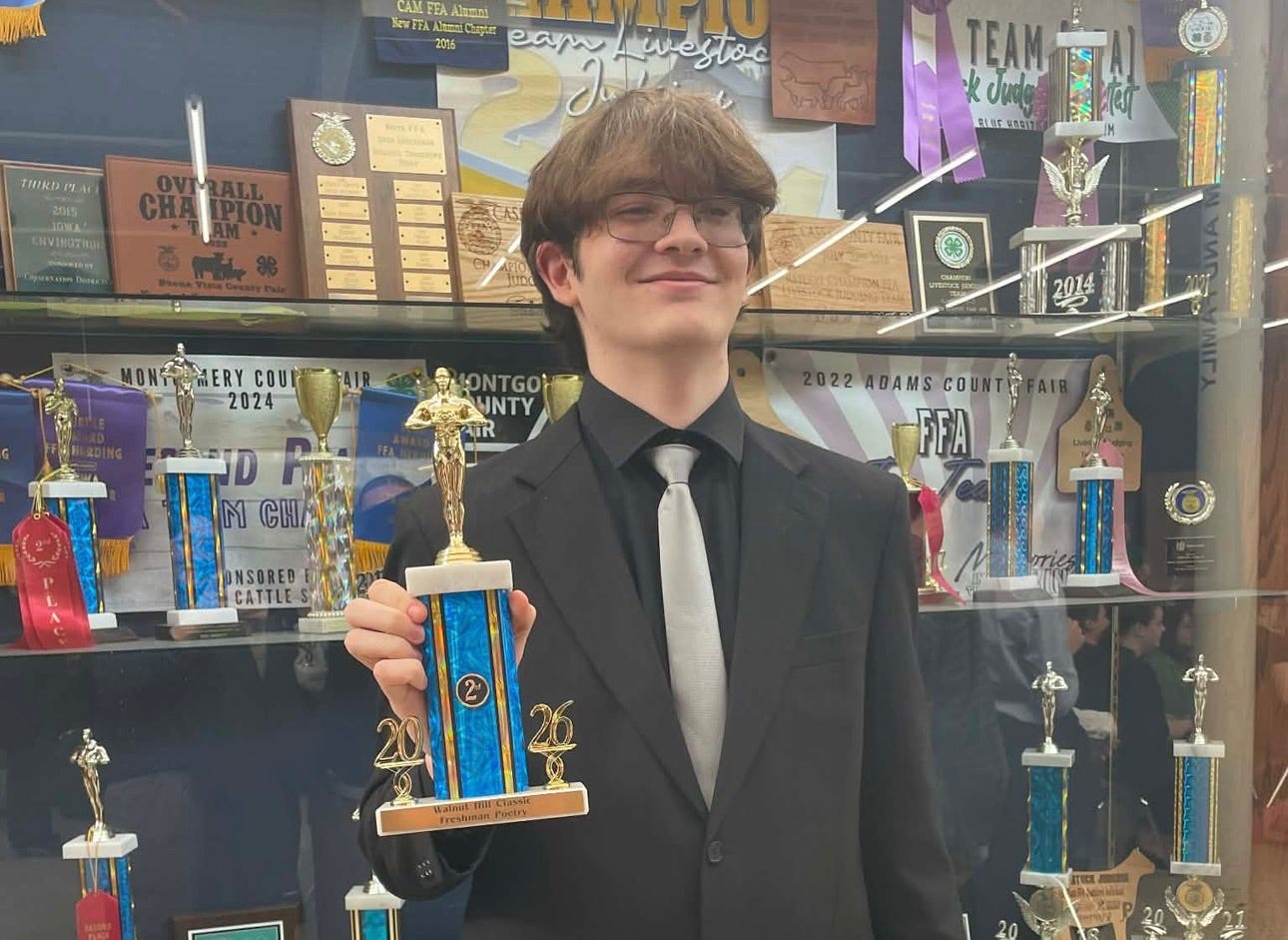
I really like the kind of teammate he is. I enjoy the visible delight he takes in getting to do this alongside his friends.
It also struck me because it occurred to me how different their relationship was just a year prior.
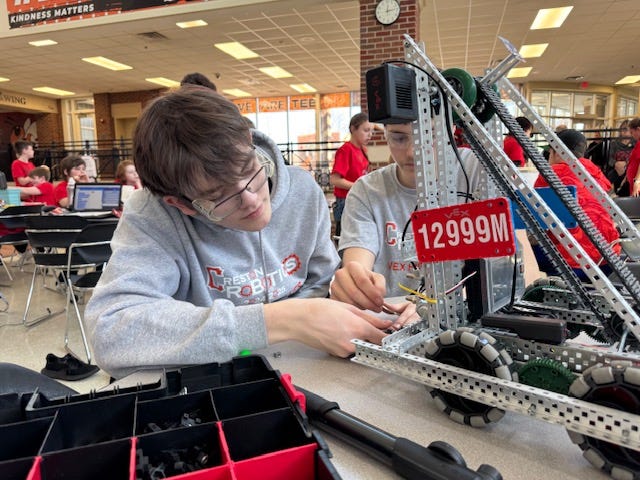
A year ago, my son attended his first robotics competition as an eighth grader. He was one of just three middle school students included in what was essentially a pilot program, a trial run to allow younger students to join a club usually reserved for high schoolers. I actually thought it was a smart setup. The middle schoolers got exposure to something challenging and exciting, and one of the high school students, a freshman, got a real leadership opportunity to lead this team.
If you’ve never been to a robotics competition, it is not some sleepy little STEM fair where kids politely stand beside poster boards. It’s a damn pressure cooker.
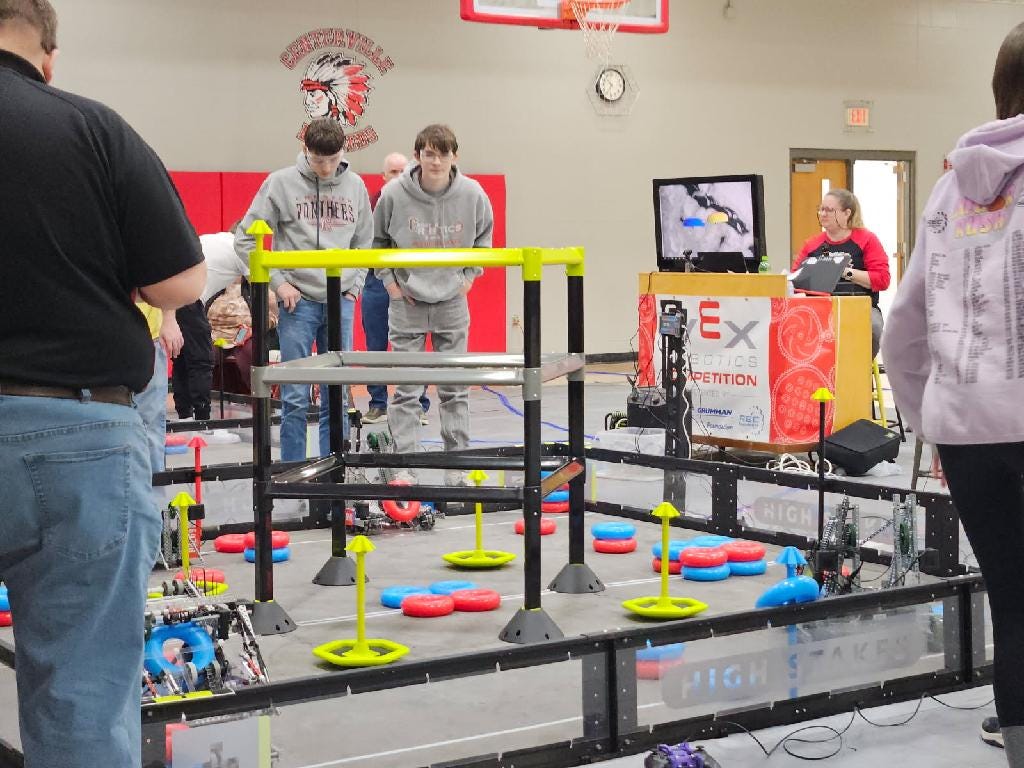
Robotics competitions are noise and clocks, tools and parts, and kids trying to diagnose a problem in real-time while other teams scramble around them. It’s timed matches of trying to destroy other’s bots while trying to protect your own, frantic troubleshooting, and last-minute repairs and modifications. It’s adrenaline, problem-solving, communication, and stress all packed into one crazy space. In these competitions, the robot doesn’t care if you’re overwhelmed and the timer doesn’t care if you’re flustered. Competitors have to think fast, adapt, and keep moving.
It’s actually a lot like life.
But on that day, when my son was still so new to all of it, with far less hands-on time than the high school kids, his student team leader snapped at him and called him “stupid” because he didn’t know what he was supposed to be looking for: a nut.
I try really hard not to intervene in kid things, but I know my son’s boiling point, and I could tell this other kid was about to push him over the edge. And maybe to protect both my child and this other kid, I said, “Please don’t speak to your teammates that way. I know you’re stressed, but there are better ways to handle yourself.”
“I don’t need a lecture from you,” he shot back.
And that was that.
I was furious, of course, and trying not to be. I was offended for my son but also trying to remind myself that these were kids under pressure, kids still learning how to manage stress, disappointment, responsibility, and each other. I even went and got them lunch from a nearby fast-food place to save them the time and hassle of having to run out themselves.
Still, my son came home put off by the whole experience. And I remember thinking maybe that would be the end of it. That one cutting remark from a stressed-out peer would be enough to sour him on the experience, or at least on that kid.
But I’m glad I didn’t make more of a deal about it, because when I saw my son grab his buddy in a hug to congratulate him last Saturday in Anita, I realized he had learned something really important: Time passes. People grow. Forgiveness matters.
Speech, like robotics, asks a lot of young people.
Some events look polished and controlled from the outside, but underneath that polish is a lot of thinking on your feet. In improv, obviously, but really in all of it. You have to recover when your brain blanks, adjust to the room, read the audience, accept critique, manage nerves, and trust your preparation without becoming rigid. You have to face your inner critic and keep going anyway. You have to learn how to hear feedback without collapsing under it or puffing up against it.
You have to become coachable. You have to learn how to be brave in public. And maybe most importantly, these kids are learning how to be supportive of each other as they are all learning how to do hard things.
That’s what I saw in that hallway.
To me, they weren’t just boys doing speech or trying to collect trophies. They gave me a bit of hope about the type of young people coming up in the world. The kind of people we really need.
We need better communicators and people who can think outside the box. People who can celebrate someone else without resentment, and tender without embarrassment. And those who know how to offer support without making someone smaller.
I love these speech kids. Individually, most are not loudest person in the room, but together they are the greatest of teammates and the bestest of friends.
And that deserves a bro hug.

Hello, I’m Sarah Scull, a former journalist and proud member of the Iowa Writers’ Collaborative.
If you want to know what Iowa actually sounds like right now, follow the weekly roundups from the Iowa Writers Collaborative. We do what newspapers rarely can anymore: move easily from politics to poetry, from sports to sharp human stories, capturing the full, complicated life of the state in one thoughtful sweep. It’s Iowa, reported and reflected by people who live here and pay attention.
And don’t forget, you can join members from the Iowa Writers Collaborative in our virtual Office Lounge at noon on the last Friday of the month. It’s a place for paid subscribers to join in on a casual end-of-month Zoom discussion.
Join the Office Lounge here:
https://us06web.zoom.us/j/87111036189
This was so great, Sarah. Thanks for sharing. I really enjoyed watching Fletcher’s enthusiasm at last night’s band concert!!
Very inspiring!